
Arraigo social (social rootedness)
This is the most common type of rootedness permit. To obtain it, you need family ties with Spanish residents or proven integration into Spanish society. Financial requirements exist, but they are not mandatory in all cases.
Who is it suitable for
You have a spouse/registered civil partner or first-degree relatives (parents, children) with a valid Spanish residence permit and sufficient financial means to support you
You have obtained a social integration report, have sufficient means of subsistence, or an approved self-employment project from the relevant authorities
Financial requirements
You have relatives with a residence permit
Relative's income of 200% IPREM per year (≈ €15,000 in 2025)
📌IPREM (Indicador Público de Renta de Efectos Múltiples) — this is the minimum income that the state considers sufficient to cover basic living expenses in Spain (in 2025 it is €600/month)
You don't have relatives with a residence permit
Own funds in a Spanish account amounting to 100% IPREM per year (≈ €7,200 in 2025).
You need to confirm the availability of funds with documentation (bank statements with average annual balance or account activity for a period of 6 months or more + proof of source of funds)
If you don't have this amount in your account, you can get your self-employment project approved by one of the associations (ATA, UPTA, CIAE, UATAE)
Social integration report
If you cannot confirm family ties with a Spanish residence permit holder, you need to obtain a social integration report Informe o Reporte de integración social — a document that:
is issued by the social services of the municipality (Ayuntamiento) or autonomous community where you reside
assesses how integrated you are into Spanish society and how you participate in community life
Important: currently, the procedure for obtaining a social integration report differs depending on the region of Spain, check the details with your local Ayuntamiento.
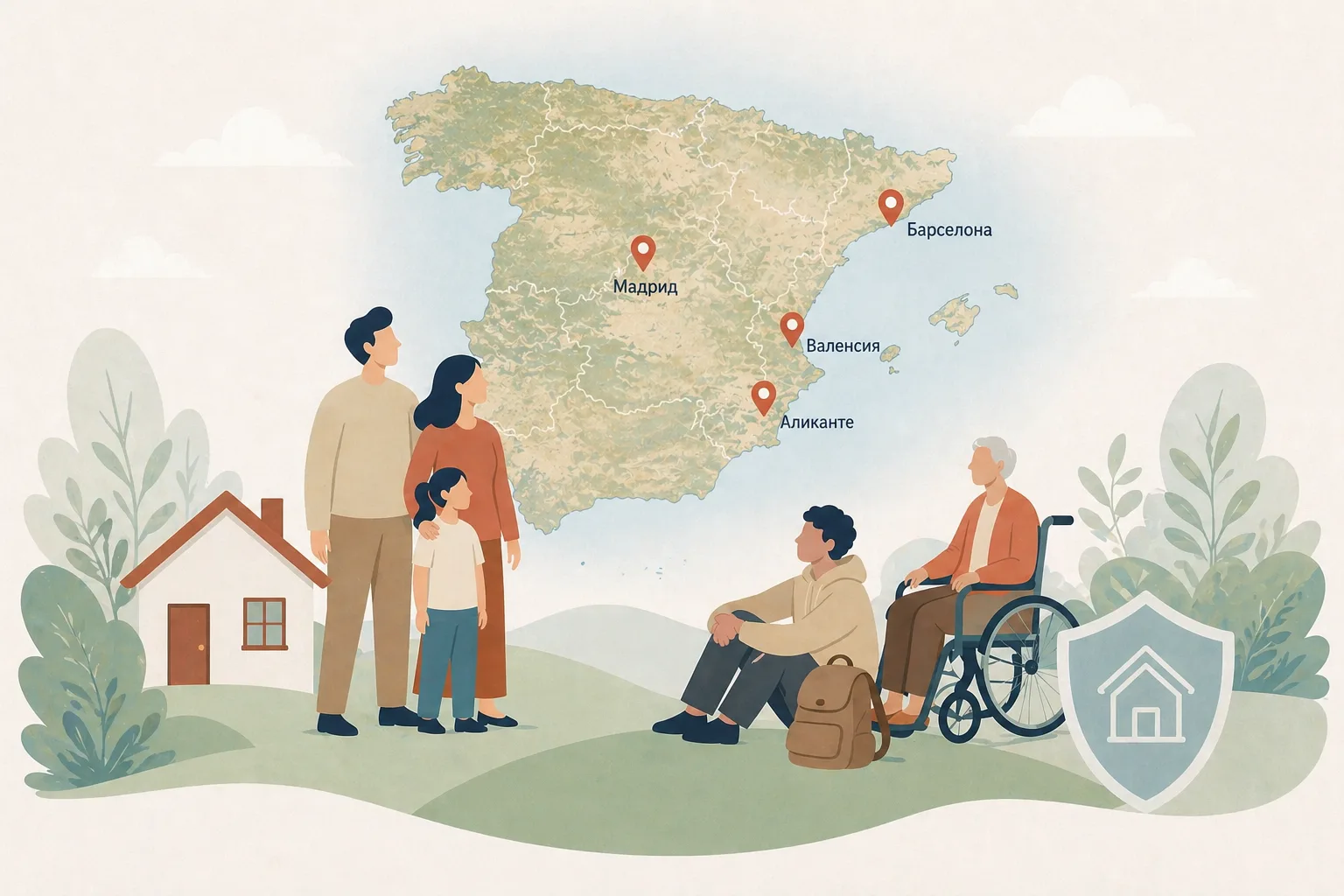
For example, in Madrid they require a certificate of completion of the "Conoce Tus Leyes" (Know Your Laws) course. In Valencia — filling out an online form for the report, in Andalusia — confirming completion of a 20-hour course.
As a rule, the social integration report evaluates:
knowledge of basic laws and state structure of Spain
participation in public life (volunteering, cultural events)
knowledge and respect for human rights, values of Spain and the European Union
learning Spanish and other official languages
List of required documents
Completed and signed application form EX-10
Copy of all pages of valid passport (or other identity document)
Documents confirming continuous residence in Spain for at least 2 years (registration certificate, bank statements, medical certificates, certificates from educational institutions, contracts, invoices, etc.)
Certificate of no criminal record issued by the authorities of the country or countries where you lived for 5 years before entering Spain
Modelo 790 052 receipt and proof of state fee payment
If you have close relatives with a Spanish residence permit:
Documents confirming family ties (marriage certificate or pareja registration, birth certificate)
Statements from the relative's Spanish bank account confirming annual income of 200% IPREM
If you don't have close relatives with a Spanish residence permit:
Social integration report issued by the municipality or autonomous community where the applicant resides
Statements from the applicant's Spanish bank account confirming annual income of 100% IPREM OR Certificate of approval of your self-employment project from an association (ATA, UPTA, CIAE, UATAE)
Additionally may be requested: self-employment registration document, certificates or diplomas confirming professional qualifications
The final list of documents may vary depending on the province where the application is submitted.